

AI and Blogging: The Silent Shift Behind
How AI Is Quietly Changing Everything
Bloggers everywhere are talking about AI, but few are watching how it’s actually reshaping the field. It’s not loud. It’s not dramatic. But behind the scenes, a silent shift is happening.
Some blogs are thriving. Others? They’re disappearing from SERPs, losing traffic, and bleeding relevance.
What’s the difference?
It’s not just about using AI. It’s about how you use it, and whether you’ve adapted to the new rules AI is enforcing without ever announcing them.
How AI Is Quietly Redefining Blog Rankings

Search Engines Know When It’s AI-Generated
AI-generated content isn’t invisible. Large Language Models leave footprints, predictable syntax, low semantic depth, lack of entity linkage, or no original insight. And while AI can speed up workflows, Google’s systems increasingly penalize over-reliance.
Dwell Time and Reader Signals Are Declining
Users are clicking through, skimming generic intros, and bouncing. Search engines are noticing. AI content often fails to hold attention, evoke emotion, or build curiosity. That translates to lower dwell time, lower trust, and lower rankings.
Algorithmic Reading of Structure > Just Keywords
The algorithm is evolving. It’s reading layout, narrative arc, entity use, topic coverage, freshness, and trust signals. Blogs that blend smart structure with original thinking are surviving. The rest? Not so much.
Why Some Bloggers Are Thriving With AI

Efficiency + Emotional Insight = Power
It’s not about using AI to replace creativity. It’s about letting AI handle the routine outlines, summaries, data pulls, so you can focus on human nuance, voice, and credibility.
Tools That Enable, Not Replace
Plugins like AI Content Aggregator show how AI can be a force multiplier, not a crutch. It:
- Pulls RSS content from relevant sources
- Uses Gemini AI to rewrite into unique summaries
- Adds images with keyword-aligned alt text
- Inserts #hashtags and proper citations
This keeps your blog fresh, SEO-relevant, and dynamically updated without churning out spammy filler.
The Most Common Mistakes Bloggers Make With AI

Quantity Over Clarity
Just because AI can write 5,000 words doesn’t mean it should. Many bloggers flood their sites with bulk content that reads… hollow. It lacks insight, tension, or rhythm. Google notices. Readers bounce.
Ignoring Trust Signals and Entity Mapping
AI often fails to embed key signals that show who wrote the content, why they’re qualified, or what authority backs the claims. Without E-E-A-T alignment or topical cohesion, the blog reads flat — even if it’s technically accurate.
No Strategy, Just Output
AI is great at writing. But it’s not good at planning why something needs to be written. That’s the blogger’s job to think like a strategist, not a scribe.
The Future: Blogs That Think Like Brands
Use AI to Build Authority Systems, Not Just Articles
Winning blogs aren’t just pumping out content. They’re building:
- Content ecosystems with semantic interlinking
- Topical authority maps that reinforce niche positioning
- Automation loops that refresh pages without rewriting
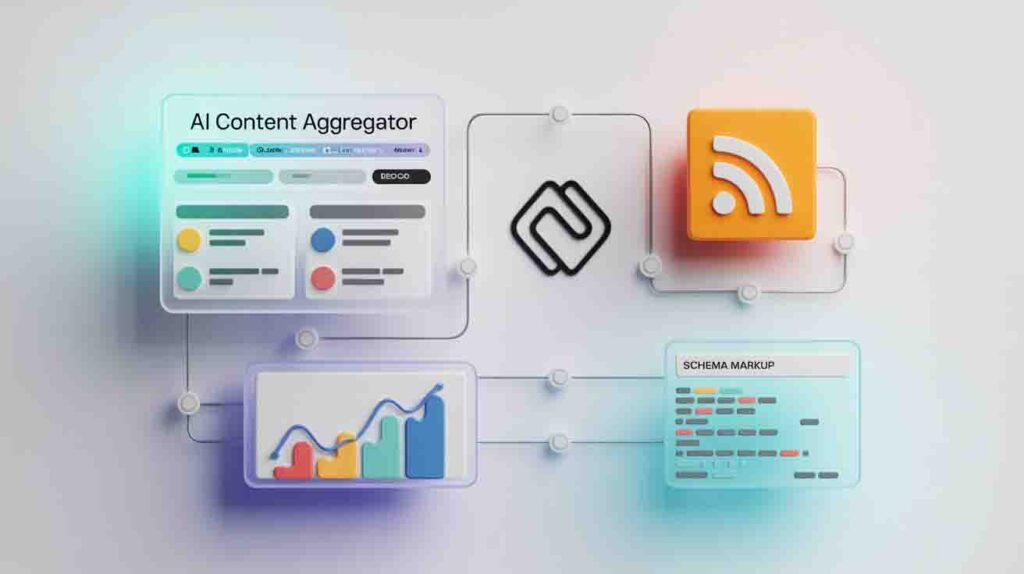
That’s where AI tools like AI Content Aggregator shine, helping bloggers deliver new value without new effort, by automating structure, sourcing, and tagging.
Feedback Loops That Keep Content Alive
Smart bloggers don’t publish and forget. They:
- Monitor performance
- Update stale entries
- Syndicate fresh summaries
- Use AI to trigger content refresh cycles every 2–3 weeks
In 2025, content that evolves = content that ranks.
Final Reflection: Is Your Blog Built to Evolve?
Blogging isn't dead, but it's different.
The game has changed from writing content… to engineering trust. From volume… to depth. From manual… to intelligent automation.
And AI isn’t the enemy. It’s the amplifier. If used wisely, it gives you back time, improves technical precision, and keeps your site alive with minimal overhead.
But if used blindly? It just makes bad content faster.
So ask yourself: Are you using AI to build leverage, or just to cut corners?
Because in today’s landscape, blogs that evolve with AI will thrive.
The rest will vanish silently.
✅ SEO FAQ Section
❓ Is AI good or bad for blogging?
AI is neither good nor bad, it’s a tool. Used strategically, it boosts productivity, freshness, and content reach. Used blindly, it can damage credibility, lower engagement, and hurt rankings. The key is human oversight and purpose-driven integration.
❓ How do I use AI for blogging without losing authenticity?
Let AI handle outlines, summaries, and formatting. Then layer your voice, insight, and narrative rhythm on top. Use tools like AI Content Aggregator to bring in timely content while keeping your tone consistent and your structure SEO-aligned.
❓ Can Google detect AI-generated content?
Yes. While it doesn’t automatically penalize AI content, Google looks for signals like originality, E-E-A-T, trust cues, and reader engagement. Content that feels generic or templated won’t rank, even if technically accurate.
❓ What’s the biggest mistake bloggers make with AI?
Publishing without purpose. Flooding your site with AI content that lacks depth, structure, or audience focus leads to traffic drops, low dwell time, and SEO decay. AI should enhance your strategy, not be your strategy.
❓ What tools help bloggers use AI responsibly?
- AI Content Aggregator: Summarizes external content, adds alt-texted images, hashtags, and citations to keep blogs fresh.
- Gemini AI: Great for rewording, summarizing, and tone alignment.
- Frase/Surfer SEO: Helps structure content semantically.
- Originality.ai: Detects over-automated phrasing for rewrites.
- Google Search Console: Monitors impact and rankings over time.
As AI transforms content creation, ftc disclosure blogging requirements become increasingly important for maintaining transparency with automated writing tools.